Interview · May 2026 · 8 min read
Connor O'Brien on Weapons & more
Camera operator and pro inline skater Connor O'Brien talks shop on his latest project and how he carved out his career.
By media[box] team

Interview · May 2026 · 8 min read
Camera operator and pro inline skater Connor O'Brien talks shop on his latest project and how he carved out his career.
By media[box] team
We caught up with our good friend, Cinematographer, Cam Op, and Professional Inline Skater, Connor O'Brien, to talk shop on his latest project, Weapons, how he carved out his career, and what keeps him inspired on, and off set.
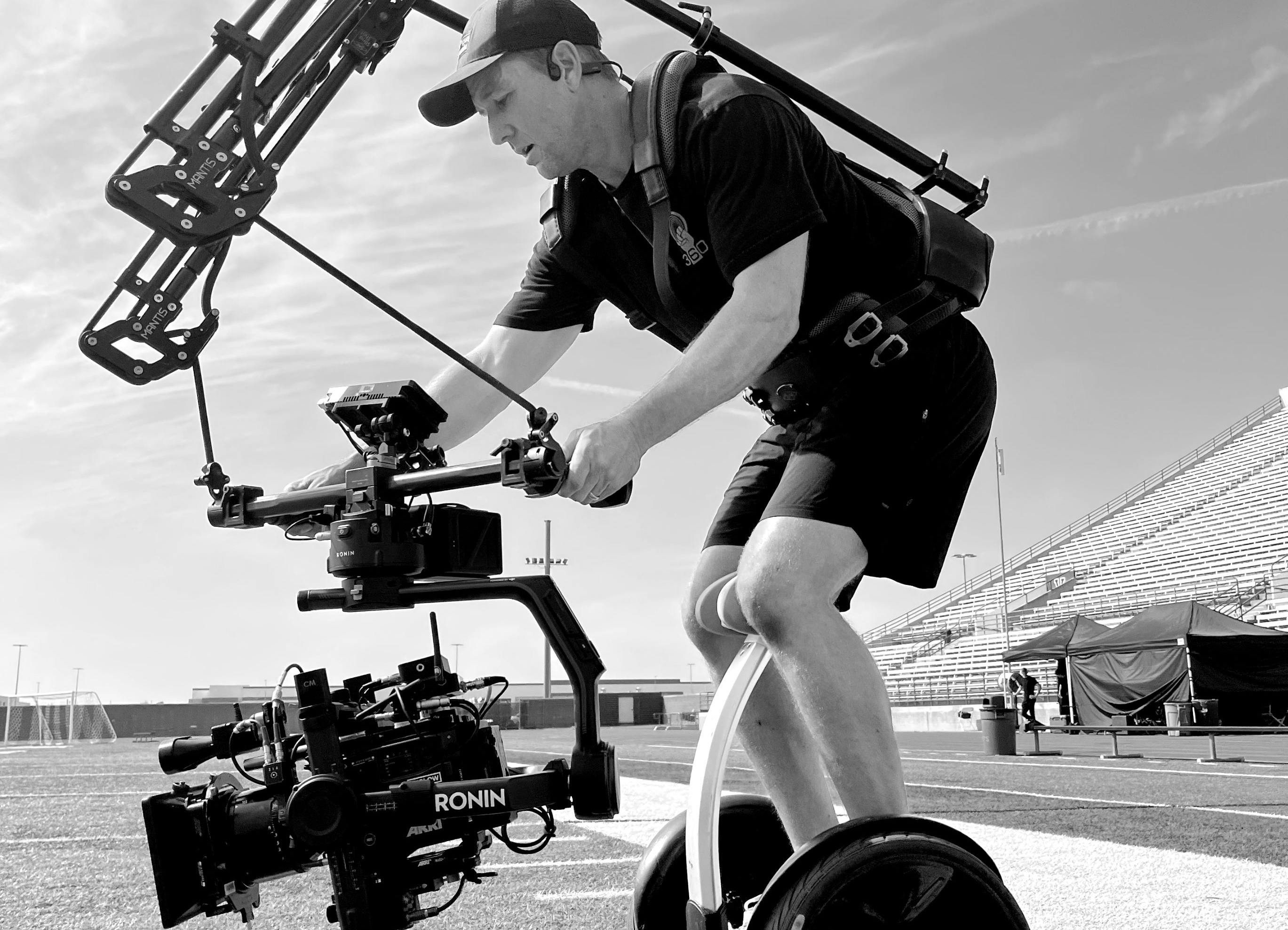
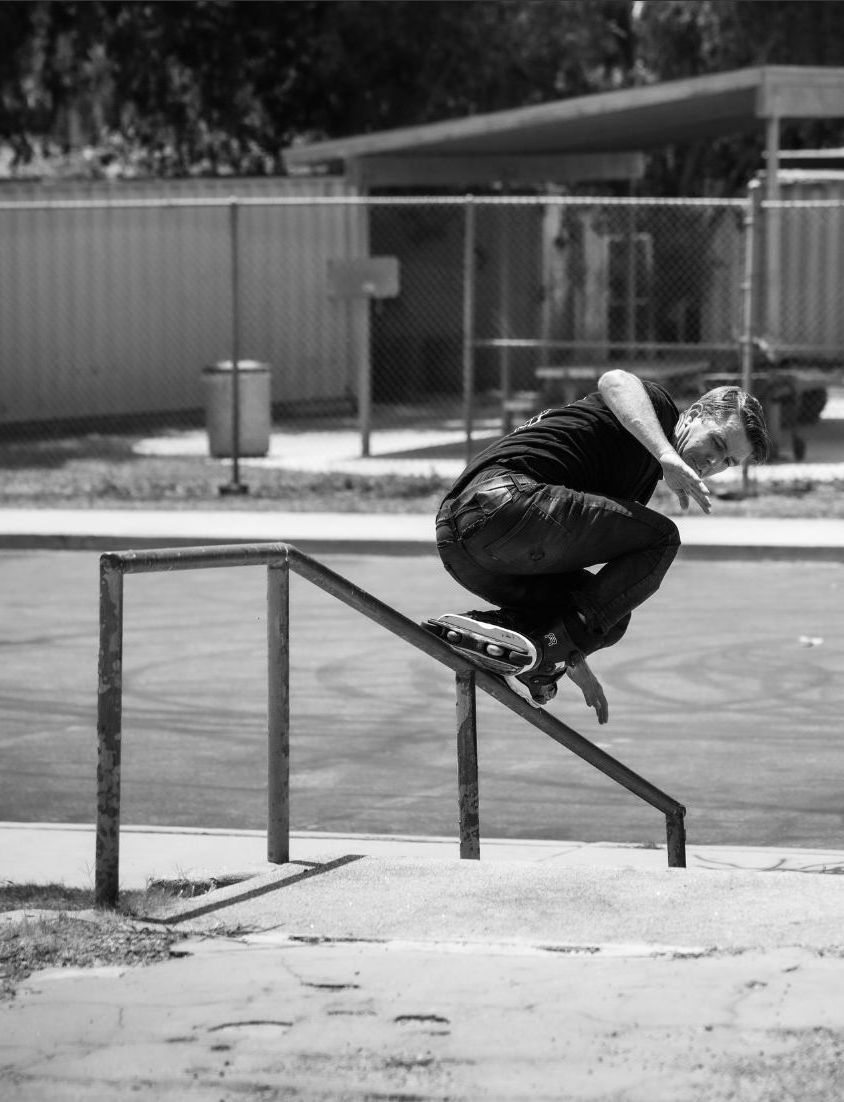
CO: Never would have dreamed that a passion for skating would lead to a passion for filmmaking. Early on in my younger skate days, the idea of holding a camera was more utilitarian than anything — "proof" that a certain trick was landed. Then, as I grew in my skill set as a filmmaker, the idea of capturing skate tricks became more about harnessing the best light, at a certain spot, or capturing the best angle for a specific trick. In regards to moving shots… obviously, when the budgets I was working with in film school were tight, filming on skates became an obvious choice. Now that I have access to bigger toys, I don't lean so much towards capturing everything on skates, but having that skill set in my back pocket opened up new possibilities for dreaming up new ways to move the camera!
CO: I've been working with Larkin for several years on various projects, and after reading the script from Zach, it was kind of a no-brainer. Larkin and I have done countless commercials together and this was the second movie I worked on with him. Over the years we've developed a creative shorthand. I feel pretty in tune with what I know he's going to like and what he's not. I very much enjoyed getting to collaborate with him, Zach Cregger and Michael Fuchs on the movie Weapons. Larkin is a very visual DP. He is one of those DPs that sets clear boundaries with what he's looking for, and often shares visual storyboards with me. He'll do a complicated camera move with his phone for instance, and we'll have a dialogue about the best methodology for capturing a certain shot in pre-production that fits within the scope of a project. There's a bunch of factors that we consider — time, money, ergonomics, speed, versatility, etc. I feel very fortunate that I get to be included in his team, and that I get to call him a friend.
CO: The most recent shots that come to mind were both in the movie Weapons. One scene I had to sprint through a house, holding a very heavy camera, while diving through multiple doors and windows. It was very physically challenging to manage and hard to replicate. Another shot in Weapons required me to be on skates, and I had to navigate full speed through a narrow convenient store aisle and make a hard 90 degree turn following closely behind actor, Julia Garner. I actually didn't anticipate using skates for this one, but while another scene was being shot, I started experimenting with different combinations of camera movements — steadicam, dolly, rickshaw and a remote head, but in the end, the skate and gimbal combo just seemed to be the obvious choice.
CO: 5% skates, 95% shoes. It's funny how you asked about the ratio of skate v.s non-skate. Everyone always assumes that just because I can do it on skates, that we should do it on skates. It's the same idea with gear. Just because you have a budget for toys, doesn't mean you should use all the toys. It's always about starting with what the story needs first and foremost. Oftentimes I'll talk people out of doing shots on skates. It can be very challenging to get consistent multiple takes, and after a while it can really take a toll on my body. When I'm DPing, especially when there's multiple cameras, I'm not always operating. I love to sit at the monitor and observe all the cameras working at the same time. It gives me the pause I need to make sure we're all executing on the scope, look, and feel of the project. I do like operating when I DP though, just not always, really depends on the shoot.
CO: I work on a multitude of different projects — tv shows, features, commercials, and music videos. Any time I get to work with my friends, make new ones, use a new piece of gear, or foster an existing relationship is a good day. More than anything I love working on narrative long form because it gives me the opportunity to be a storyteller.
CO: I don't really have any "go-tos." I love using gimbals on set. I think my go-tos would be a thermos of really good coffee. That never changes.
CO: I've worked with directors who absolutely hate marks, same with actors, and I get it, you want to be able to be in the moment. I've also worked with Directors and DPs who are super methodical, like surgeons, and mark both actors and camera positions. I try to tune into the Director's way of working to be as adaptable as I can be. It really changes project to project.
CO: I'm always inspired by new skaters. Lately, I've been obsessed with watching Alex Honnold free solo.
CO: Sinners, Weapons, and Eddington. The cinematography on display from Autumn Durald, Larkin Seiple, and Darius Khondji are absolutely incredible.
CO: Bang energy drink. Super unhealthy, lots of energy, and 0 calories.
CO: When I'm skating, I will rehearse a trick over and over until I get it right, and the person filming me has to be patient. I bring that same mentality into filmmaking — creating a space for my fellow directors, cinematographers and actors. When I'm operating, I tune into the person I'm filming, which leads to anticipating when they are going to fully commit. I try to create a space where we can work through it till everyone feels good about putting their name on it. It's very collaborative.
CO: Once I step foot on set, I'm a fly on the wall. I do a lot of listening. I try to show up 30 minutes before my call most days. This is often related to unloading and prepping the gimbal or steadicam. I also hate the idea of being rushed, so showing up organized and prepared gives me the confidence I need to be present, listen, then perform.
CO: I think this topic is really nuanced. Generally, I'm not interested in AI. I'm not interested in it for the same reasons I'm not interested in robots playing basketball, cats making paintings, or computers playing chess. There's no stakes! There is no human connection or human emotion involved. The existence of AI has made me question the very idea of authorship within art itself. Then from a vfx standpoint, I can see it being a useful tool (not replacement) for helping with the monotonous tasks of rotoscoping, sky replacements, color matching, etc. I have no idea what the future holds with AI, I just hope as an industry we can agree that we are collectively interested in human connection and human stories told BY humans.