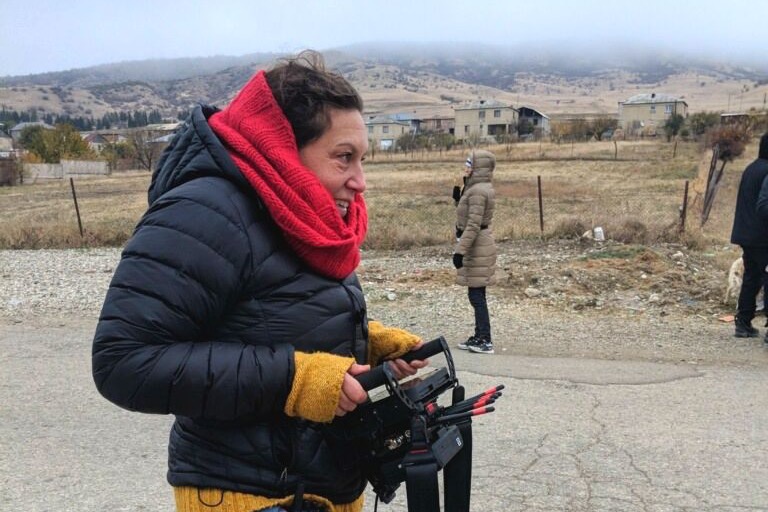
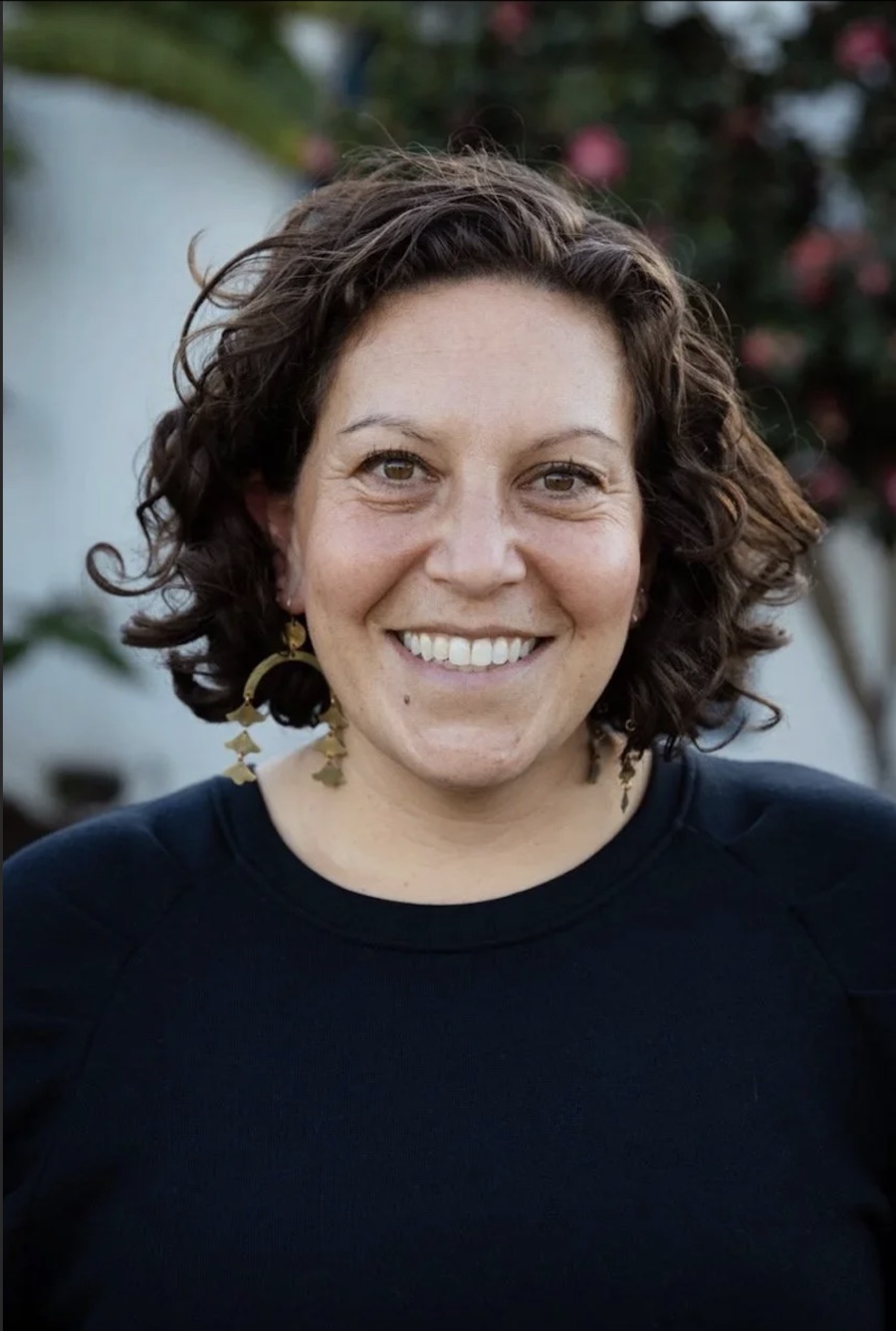
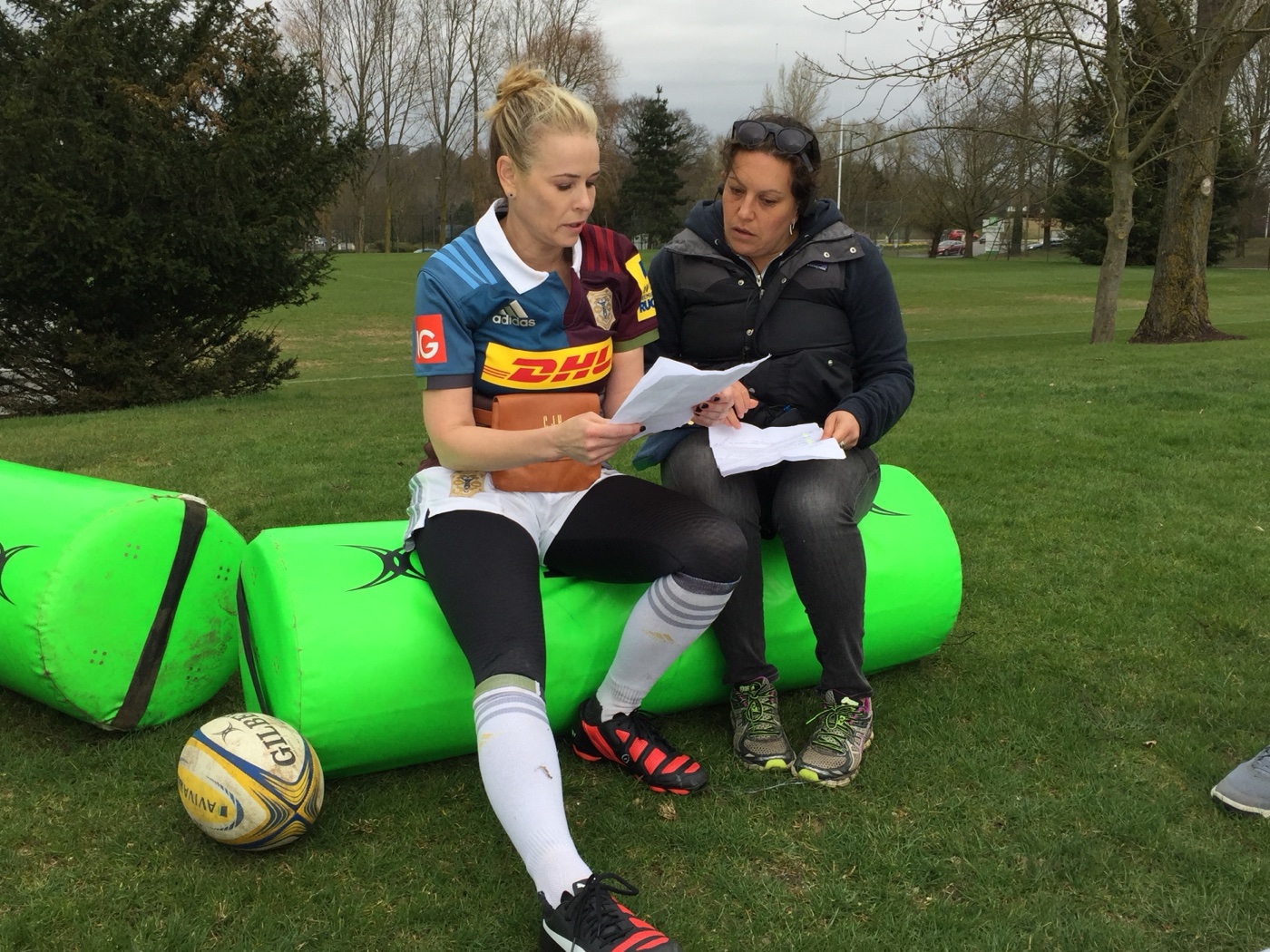
We caught up with our good friend, Emmy nominated, Director, and Showrunner, Dara Horenblas, to talk shop on her latest project, American River, the best advice she's ever received about Documentary filmmaking, and what happens when you have three days to shoot an entire episode of television, mere 'hours' to travel to and shoot the lovely Seth Rogen, and find yourself stuck at Phnom Penh Airport at 4am.
MB: You've had 20+ successful years in the industry. How did you get into Filmmaking, TV, and more specifically Doc work?
DH: I didn't go to film school. I was in college in Boston, studying Media and Spanish. As I was trying to figure out how I wanted to spend my life, I realized there was no part of me that wanted to sit in a cubicle for 30 years. I have always loved to tell stories, and prefer to work collaboratively. Friends of mine had mentioned they were interning for this local doc film maker, Josh Seftel, who incidentally just won an Oscar for his short doc, All the Empty Rooms, and anyway, I started out interning for him.
MB: What were some of your first paying gigs when you got out of school?
DH: After I graduated from college, I moved to New York, and got a job PAing at the Today Show. They hired me 4 hours a day, on the 6-10am shift, and I would tear scripts…because it was the olden days, and Producers started to ask me to do stuff without realizing that I didn't work there full time. I started taking on more responsibilities, and people started trusting me. I was just like, oh, if you do a good job, you get more jobs, which is still true, but things have really changed a lot since then, and even more in the past five, six years.
MB: How do you mean?
DH: Well, like you know, I was working with Netflix at their peak. People were getting budgets and a lot of creative reign, I got really spoiled. We had Ugly Delicious and then this little show called Worn Stories right after that. It was just sort of like this time in TV of 'hands offness from the Studios, and good budgets'. The last couple of years have felt like total stagnation, but I think things are slowly getting better. I still feel like the market is extremely tight and safe, and that means basically nothing but shows with big celebrities and true crime, but it does feel like there's finally some more interesting movement again, which is good.
MB: Ugly Delicious was a doc series that combined travel, cooking, and culture to explore how specific dishes and cuisines reflect history, identity, and societal barriers, and was nominated for an Emmy. What do you think made that show so successful?
DH: The original concept for the show was pitched as a television version of the magazine Lucky Peach. I was brought on for the 2nd season. There was this opportunity to take some risks, and try things, and see what worked, you're not always afforded that. Dave [Chang, Chef and Host] was opening restaurants, and having a baby, and we had this very tight window. I think we were in like nine countries in seven weeks or something ridiculous like that, but we had the best team of people, I loved and still love all of them, and like it was just a great experience, and I think that shows up onscreen.
MB: You've worked on so many different projects from Surf Girls Hawaii, a series which aired on Amazon, to Inside Man, the Spurlock series that aired on CNN. Looking back on it all, do you see a common thread, or through line in your career so far?
DH: I'm drawn toward exploratory series and features because I'm genuinely curious. I love to be able to dip into other worlds and learn a million different things that I wouldn't have access to otherwise, and any time I can have a tiny bit of impact, or like usefulness in the world, I'm there. Sometimes social impact can just mean inspiration and joy.
MB: Documentary filmmaking has changed and evolved so much in the last 25 years. From observational, to participatory and now this subgenre of unscripted content is really prevalent. There have been a lot of questions raised about the ethics of journalistic story telling in general, what's your take on it all?
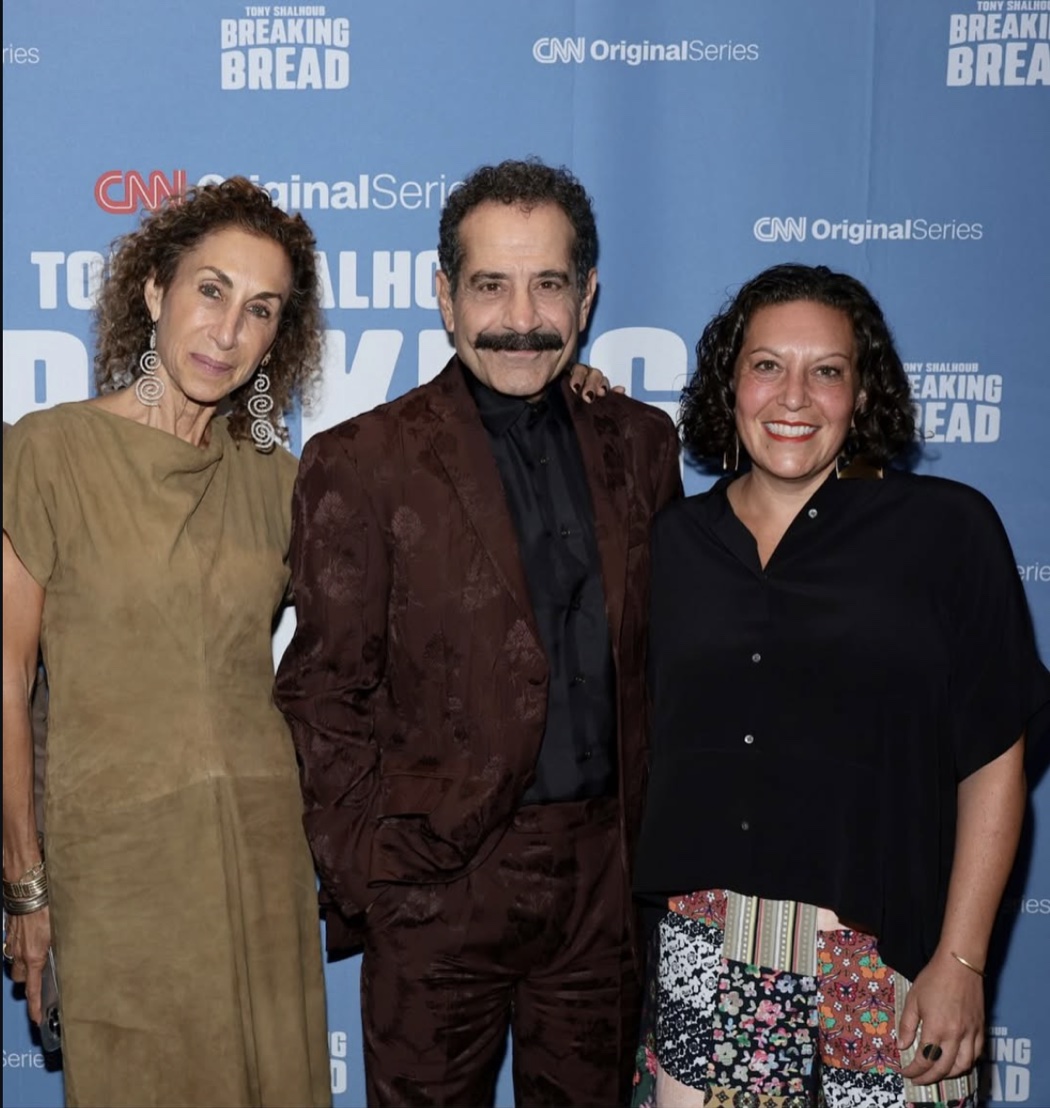
DH: Well, when I first moved to LA, somebody introduced me to some people at one particular production company, which I will not name, and I walked in, and at the first meeting, they started talking to me about helping craft lines for teenagers, and how I would have to get them to say certain things, and I was like, No, Nope. This isn't for me. I've skirted reality. I have been lucky to find and work on unscripted doc series that have never forced me to create what wasn't there. With the Tony Shalhoub Breaking Bread Series last year, CNN tonally wanted the show to be funny and warm, which is a vibe I love, that was the 'ask'. When I'm working with real people, but we are creating something for them to explore, I like to think of my job as making a good sandbox for someone to play in, you know, create an environment, and pair them up with someone to learn from, or play off of. Comedy is different, because it's not just, 'What do we need out of the segment to tell the story, but figuring out what could potentially be funny out of the segment', and it's not always what you think it's gonna be.
MB: I'm glad you brought up comedy. You worked with Chelsea Handler on Chelsea Does, a four-part Netflix documentary series that follows Handler as she explored some social topics, and then again on her talk show for Netflix. What was that experience like?
DH: Yeah I was a supervising producer on Chelsea Does and then a Director and Senior Producer on field portions of the talk show. That was probably the biggest crew I had worked with in my career, at that point. It was a lot of traveling. We were out in the field. We went to Peru to do ayahuasca, all kinds of wild shit. It was a lot of fun. On the talk show, we did dinner parties with great combinations of people, spent a couple weeks in India, hit up a sheep farm in Wales, but also went to the Democratic National Convention while she interviewed politicians. We got to do so much across such a wide scope.
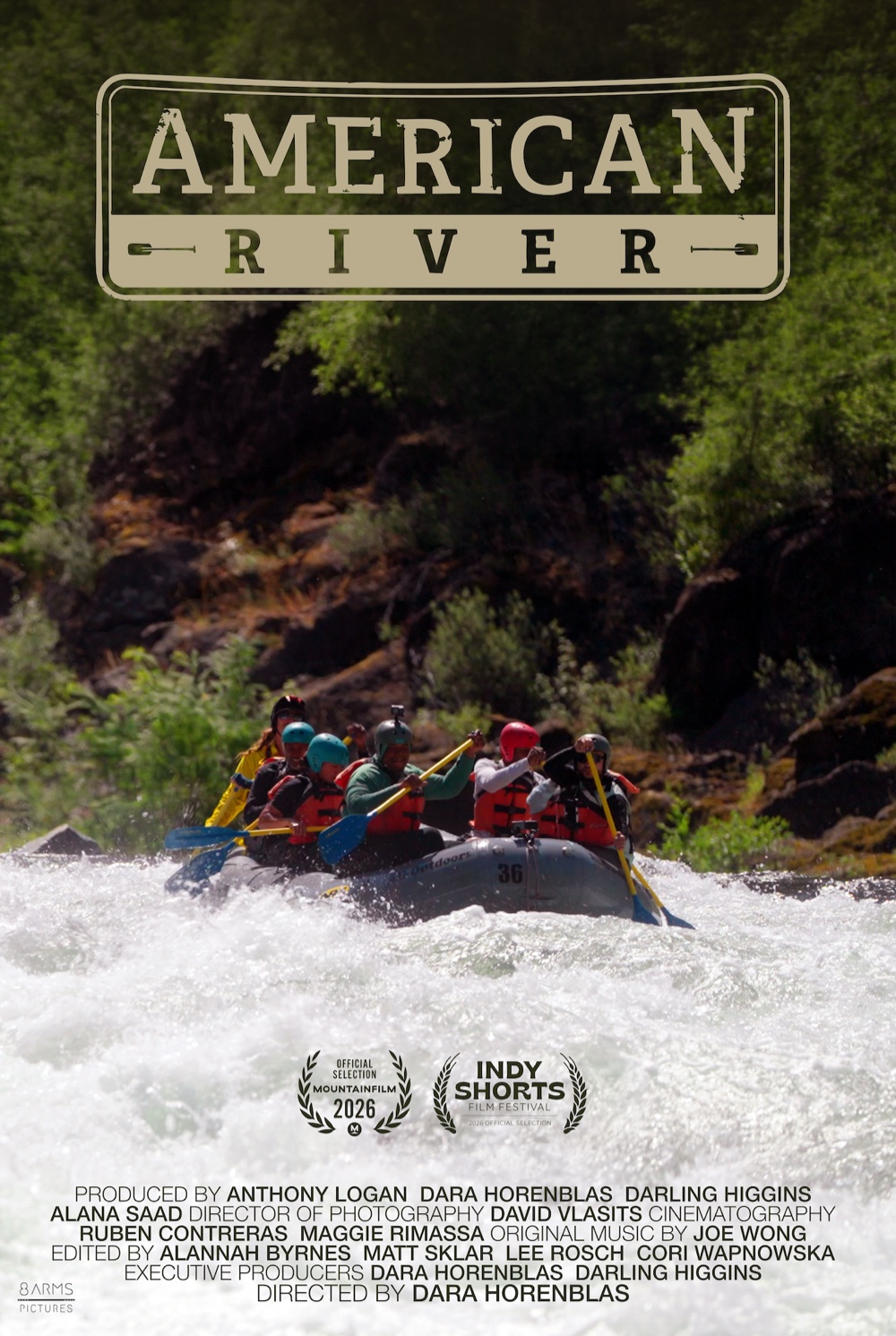
MB: One of your more recent projects, American River, was an official selection at Mountainfilm Festival 2026 as well as Indy Shorts 2026. Can you tell us a little about how that project came to be?
DH: I was coming off of a horrible project, and questioning everything about the industry and my life choices…and, I was just really determined to make something that I could feel good about. A few years back, I had worked with this non profit organization called ARC (Anti Recidivism Coalition), first through Chelsea, and then again with Worn Stories. ARC is working to end mass incarceration. They do both policy work and run a ton of re-entry services and programs, helping provide support as people integrate back into free society after being incarcerated. Their goal is to help justice-impacted people build community, and prevent people from ending back in the prison system. I wanted to help build more awareness around this real issue that is deeply underrepresented, and in general misrepresented, so I reached out to them, and asked, like, what stories would be helpful to have told? What could we do together that could be useful? They mentioned this annual rafting trip. I wanted to make a short that had a beginning, middle and end, something contained and executable. I had no business shooting in, and around whitewater, but we did it. We had like a month to prep it. We shot two cameras, and a bunch of specialty stuff for four days, and one day of interviews. We also did some follow up audio interviews in post. I wanted to let the individuals featured speak for themselves, and chip away at shifting the narrative of what's possible for formerly incarcerated people, and also what's possible for all people with real opportunity and community.
MB: You have collaborated with so many amazing filmmakers, over the span of your career, what's the best filmmaking advice you've ever received?
DH: I guess, one of the earliest, best pieces of advice I've ever received came from working with Morgan Spurlock on Comic-Con: Episode IV - A Fan's Hope. I had sent in notes from the field and he emailed me back, before we ever met, saying “don't be afraid to sit in the silence.” That always stuck with me. Just be there. Shoot the tears, if there are tears. It can feel really personal, when someone is sharing their experience, but that is what someone is asking of you when they want you to tell their story.
MB: In filmmaking things don't always go as planned. We like to call it the 'fuckening', it's not a matter of 'if', but 'when'. Do you have any fond memories that stand out?
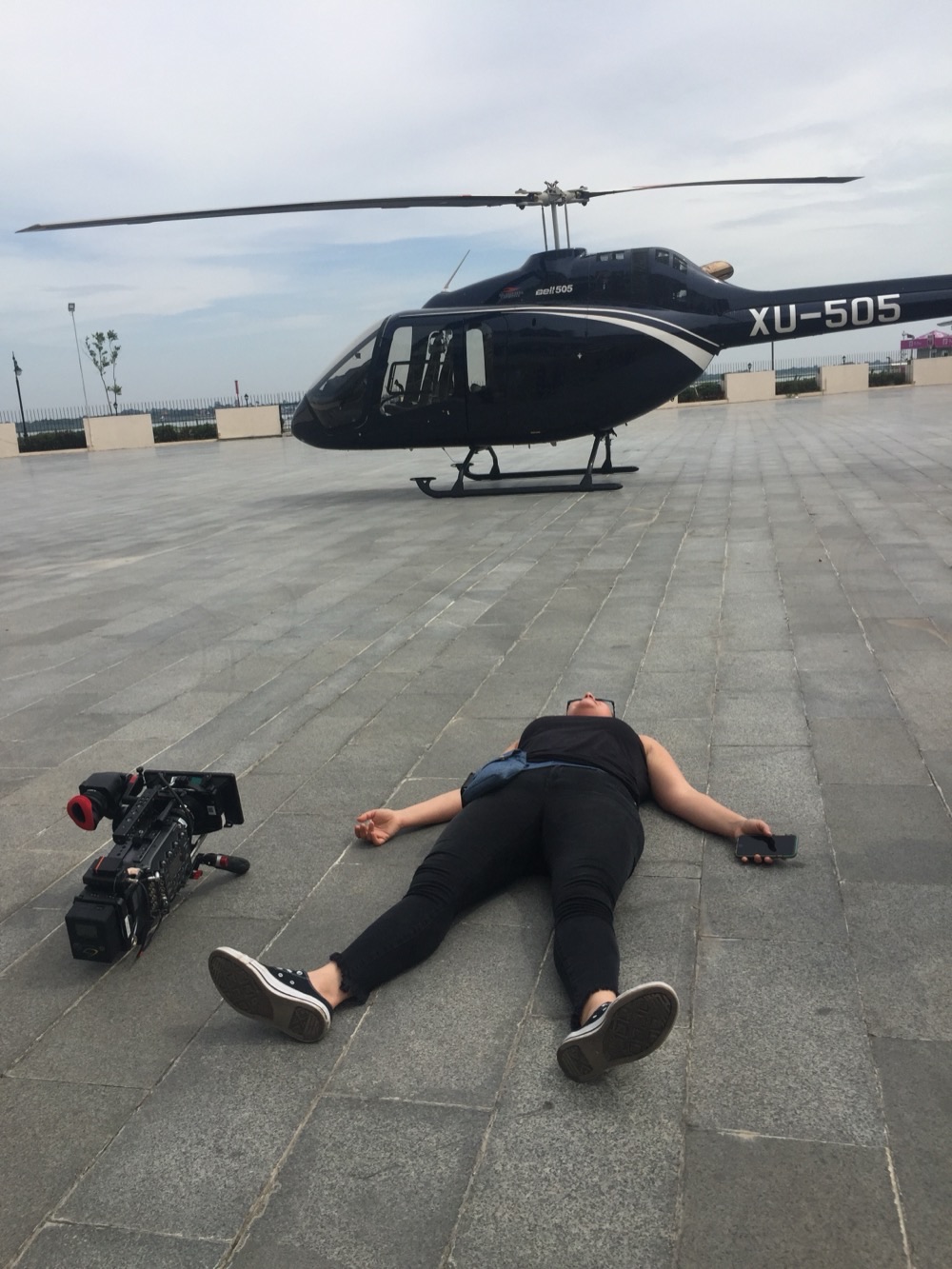
DH: I mean, I feel like things change all the time. You travel across the world, show up to shoot, and you think the main character that you're going to shoot is the person, and then it's like, 'Oh, no, only my Uncle knows how to make that recipe…..ugh, okay, well, where's your uncle? Let's get your uncle in here.' This one time I was flying from Cambodia to Vancouver on China Eastern or something, we had been shooting with Kate McKinnon and were going straight to a Seth Rogen shoot. Anyway, we were in the middle of it all, like a full episode in three days, and it was 4 AM, and we were sitting on the floor of the Phnom Penh airport with our, you know, 857 cases. We get to the ticket counter, and they wanted us to pay the baggage fees in cash. $12,000.00. We thought it had been set up with the airline ahead of time, and they were just like No. They wouldn't budge, and we had to get on that plane. My PM tried to use a credit card, but the airline said we would have had to go into the city to pay at an office, which would have meant missing the flight. It was a mess. Everyone was taking turns at the counter, trying to reason, but it just wasn't happening. We finally realized, wait, we have per diem, we gave out cash per diem and nobody had spent it yet, so everyone put up. I'm like compiling this wrinkled stack of cash - thousands of dollars on the airport floor, and by the time it was sorted, it was a full Argo situation…my Producer was at the boarding gate like dropping things just to slow things down, so more of us had time to clear security and run to the gate, and we did, we made it, as the door was closing.
MB: Best and worst place to shoot?
DH: Japan is like a permitting nightmare and you can't walk around there without permission. You can't stand anywhere without permission. Like, it's such a hard place but obviously it's Japan, so it's delicious, amazing, and great, just hard af. What's the best place to shoot? Um, the easiest? Anywhere tiny and remote, or rural that's not mad at you for WHAT you're shooting is the easiest, as long as you don't break any gear.
MB: When working on docs series you're often put in precarious places, out in the field, with limited access, and or sometimes limited crew. As a Director and Showrunner how do you approach those situations?
DH: Every show's workflow and process is different. I've often worked on series, where I don't have story producers or writers. I have definitely shot footage, more so earlier in my career where like, I would be laying on the floorboards of a car hand held. I really love crafting the composition of a shot, but controlling settings and menus, that is not my forte and definitely stresses me out. I keep pretty good notes and love the collaborative process of figuring out what's going to work and how, when I'm in the edit. I love when I have a really good Editor, someone I trust, who likes story, and generates ideas. It's great when we have enough time to try things, because it always evolves. On American River, I was my own media manager, set up on a tarp in the wilderness at midnight, in the middle of nowhere, running on lifesaving jackery power bank batteries, hoping I didn't push the wrong button. I would always rather be in a collaborative situation any day of the week than flying solo. At the end of the day, I just want to be out in the field, collaborating with a team, telling stories.
MB: Dara before we go, any new projects in the pipeline?
DH: There is! I'm currently working on an unnamed project with Morgan [Neville] and hope to share more on that soon.
MB: We look forward to it. This was fun. Thank you Dara.